
Lysergic Acid Diethylamide, commonly known as LSD, is a powerful psychedelic substance first synthesized in 1938 by Swiss chemist Albert Hofmann while working at Sandoz Laboratories. Hofmann initially created the compound while researching chemicals derived from ergot, a fungus that grows on rye and other grains. Its psychedelic effects were not discovered until 1943 when Hofmann accidentally absorbed a small amount and experienced the first recorded LSD trip.
During the 1950s and early 1960s, LSD became a subject of significant scientific research. Psychologists and psychiatrists studied the compound to better understand consciousness, perception, and certain mental health conditions. Some early studies explored whether LSD might help with psychotherapy or provide insight into how the human brain processes emotions and sensory information.
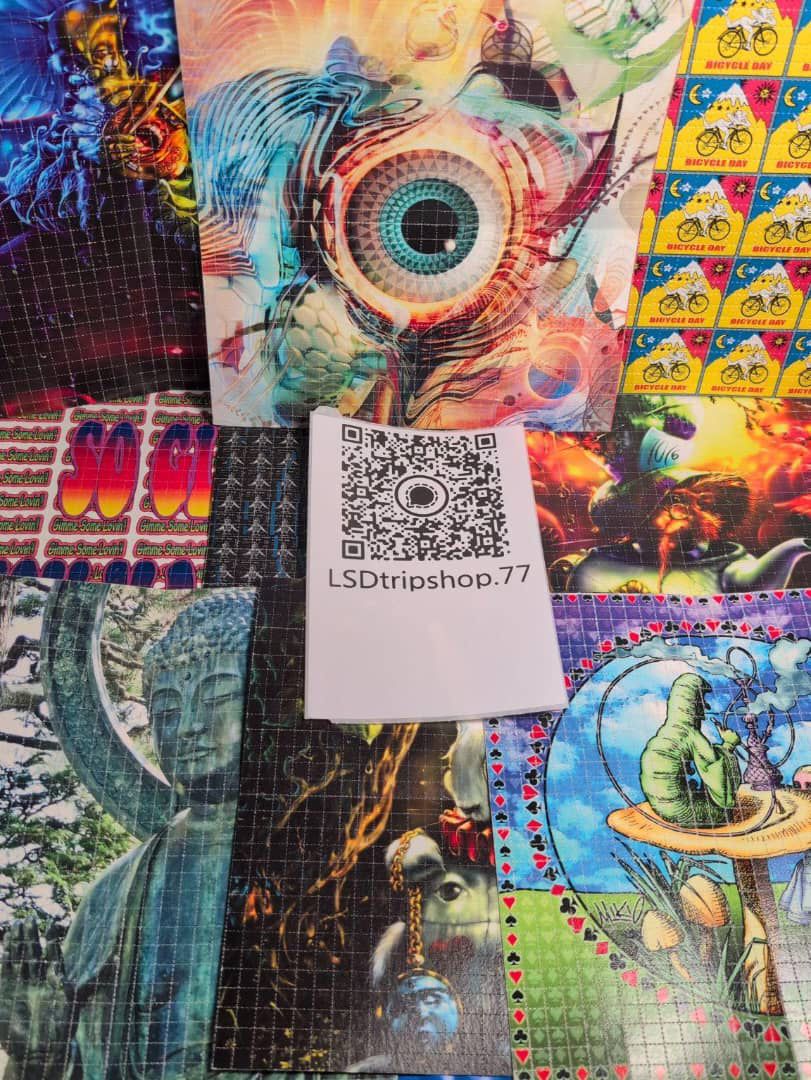
One of the most recognizable forms of LSD distribution became LSD blotters, which are small pieces of absorbent paper infused with very tiny amounts of the liquid compound. These sheets are often divided into small squares, each designed to hold a controlled dose. Historically, blotter paper became popular because it allowed the substance to be stored, transported, and distributed in extremely small quantities.
Blotter sheets often feature colorful artwork, patterns, or symbols printed on the paper. Over time, these designs became part of psychedelic culture and were sometimes used as identifiers for different batches or sources. Researchers and historians studying psychedelic culture often analyze blotter art as a small but interesting part of the visual history surrounding the psychedelic movement.
By the late 1960s and early 1970s, LSD became associated with the counterculture movement in the United States and other parts of the world. Governments eventually introduced strict regulations, and the compound became illegal in many countries. Today, LSD remains a controlled substance in most regions, though scientists continue to study psychedelics in controlled research environments to better understand their effects on the brain and human consciousness.
| Quantity sheet | Half a Sheet, A Sheet, Double Sheet |
|---|
Be the first to review “LSD blotters”
Related products
LSD
Reviews
There are no reviews yet.